
Baca County Municipal Court Warrants
Colorado municipal courts handle violations of town ordinances, not state crimes. That division of labor matters for a warrant search. A missed setting in an ordinance case can push a municipal judge to issue a bench warrant, though not every late fine turns into one. Only the town's court file shows whether a warrant was issued and what its status is now. The Colorado court overview lays out the jurisdiction split. A state traffic or criminal charge belongs to Baca County state court even when the incident happened inside town limits. An ordinance charge belongs to the municipal court. Read the citation. Ask which law was charged and which court is listed. That single question points you to the right clerk.
Walsh Municipal Court Schedule
Walsh posts the clearest municipal court details in Baca County. The official Walsh court page gives the schedule: court is generally held on the third Thursday of each month at town hall. The page also warns that court may not convene when no active cases are set. A calendar pattern is helpful contact context. It is not permission to show up without confirming your setting, since the schedule alone says nothing about an active warrant.
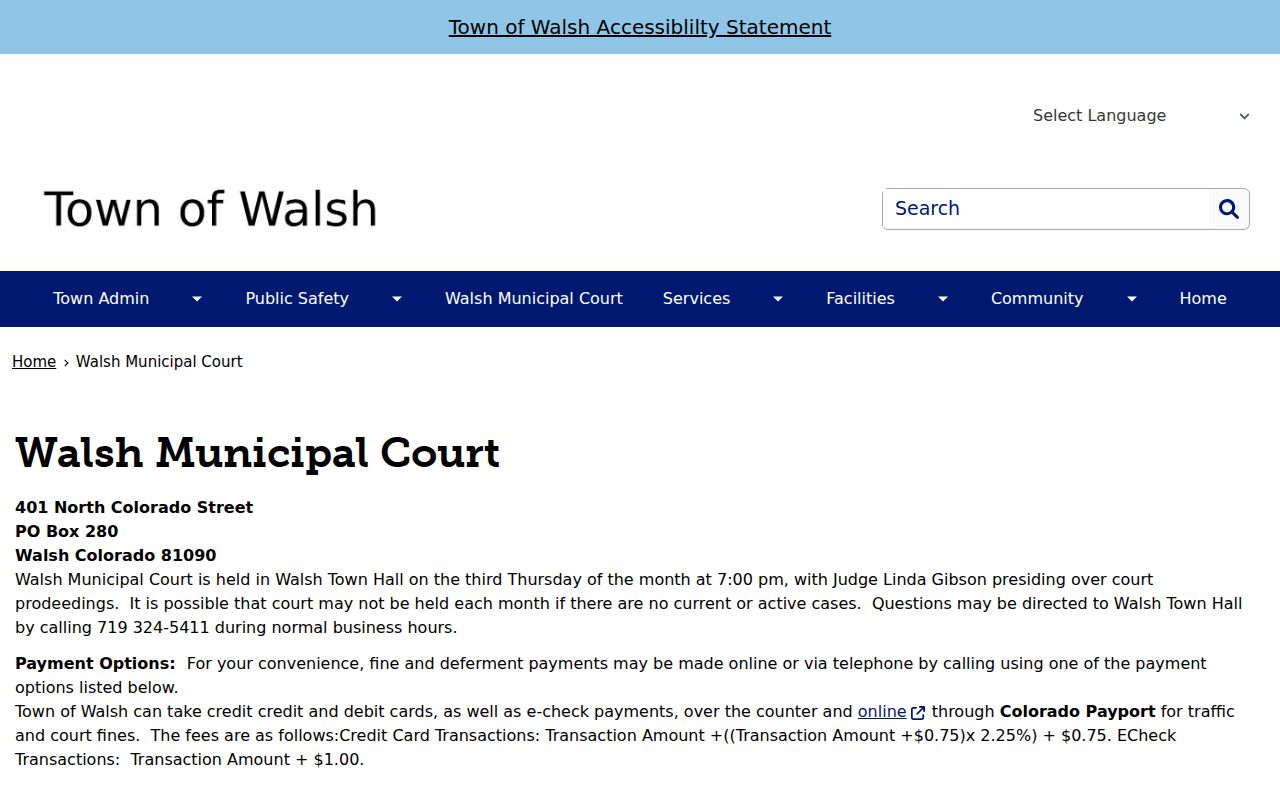
Call before you drive to Walsh. Ask whether your matter is on the calendar, whether you must appear, and whether any warrant is still in force. The court page offers no warrant lookup or recall procedure for Baca County visitors, so the phone call is the check.
Baca County Cities With Municipal Courts
Baca County's five municipalities are Springfield, Walsh, Pritchett, Campo, and Vilas. Walsh publishes a municipal court page, and Springfield offers a court and traffic-payment route. Campo, Pritchett, and Vilas post no separate court or warrant portal. That gap does not mean no ordinance cases exist. It means each town must be asked directly to name its records custodian.
Springfield
Use the town’s official contact and payment links, then confirm warrant status with the court rather than the payment vendor.
Walsh
Use the published municipal court page for schedule and payment context; ask the clerk for current process status.
Campo, Pritchett, Vilas
Start with each official town contact and ask whether an ordinance file exists and who keeps it.
Walsh Policing Is County-Provided
The Walsh public-safety page states that the Baca County Sheriff provides law enforcement in town. So one office may hold the judicial record while the sheriff holds the service, execution, or return record. The two are related records, not copies of each other, and a warrant check may need both.
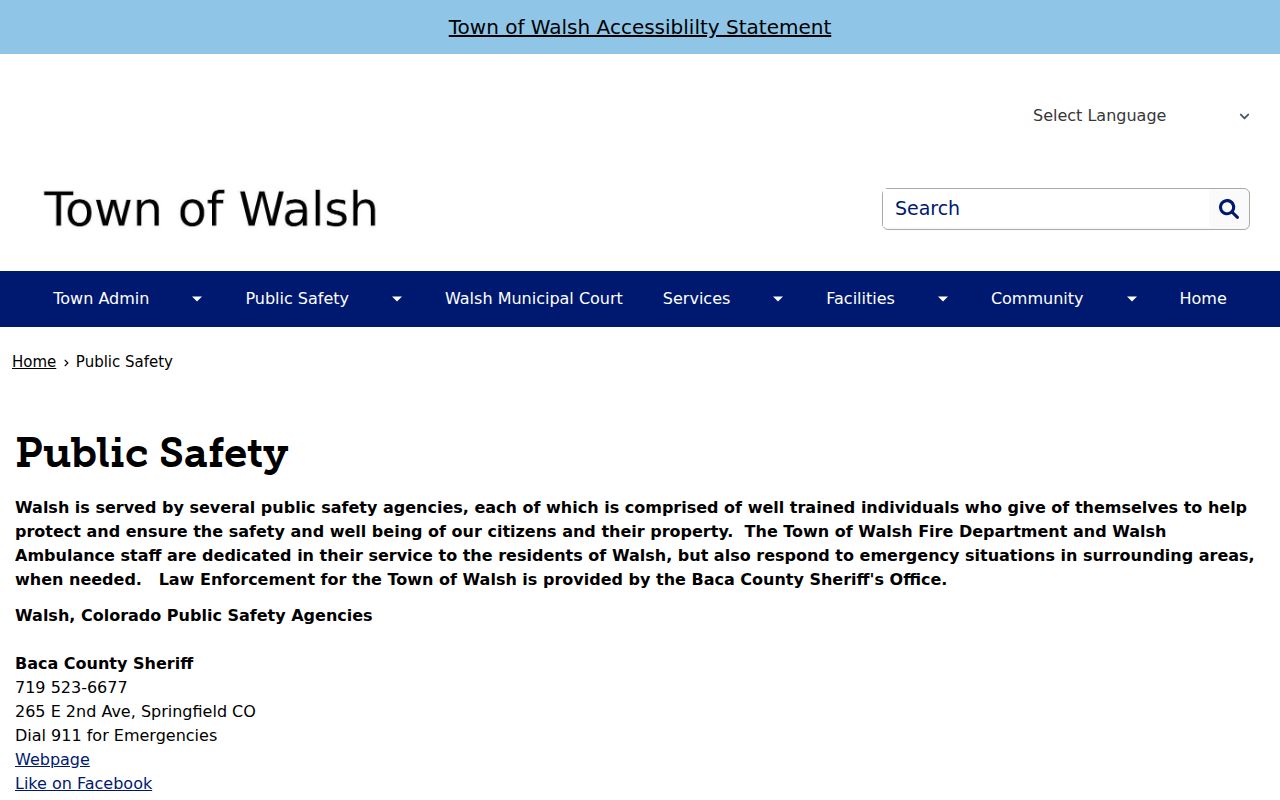
Official Walsh and Baca County pages list different sheriff phone numbers. Neither number is a dedicated warrant line. Trust the label the page itself gives, verify current contact details, and call 911 only for a true emergency.
Checking a Municipal Court Warrant
A Baca County municipal warrant check takes several steps, because no single portal covers all five towns.
- Read the citation, notice, or receipt for the town, ordinance, case number, and court name. Do not route it solely by where an event occurred.
- Check the issuing town’s official court or government page. Springfield and Walsh publish useful links, but neither shows a live warrant roster.
- Contact the municipal clerk and ask whether process was issued, its current status, whether an appearance is required, and what record confirms recall.
- If the town directs the matter to state court, contact the Baca County Court clerk. For service or return records, contact the Sheriff’s records custodian. Seek counsel before arranging an appearance if arrest is possible.
Note: A no-result on a state docket does not clear a Baca County municipal warrant because town ordinance files may be separate.
Springfield Has No Warrant Portal
The Springfield staff page includes a Police Department directory. Springfield publishes no warrant-status page for Baca County readers. The directory gives official contacts, but a staff listing is not a warrant list and says nothing about anyone's legal status.
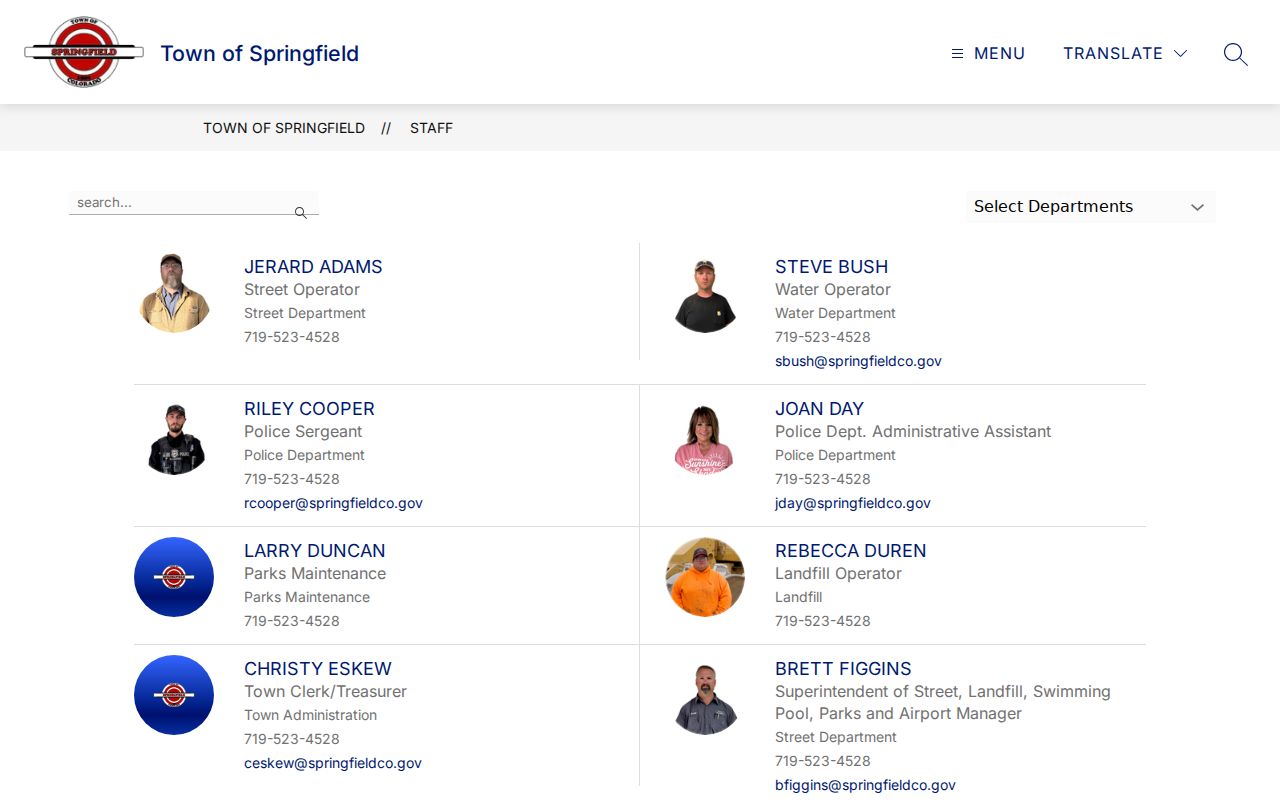
For a Springfield ordinance case, ask the town to identify the court clerk. For a state case, use the Judicial Branch clerk. If the question is whether a warrant was served or returned, the law-enforcement office holding that record may be separate in Baca County.
Inside a Municipal Court Warrant
A municipal warrant record should tie the order to the issuing court and the ordinance case. Baca County publishes no county-wide format, so treat any warrant number pattern as unknown.
| Case or citation | The town court identifier, shown as municipal case number. |
|---|---|
| Ordinance charge | The local code provision alleged; it is not the same as a state statute charge. |
| Issuing court | The municipal court and judge responsible for the process. |
| Trigger event | A missed appearance, unpaid judgment, or other court event, if the public order states it. |
| Current status | Issued, executed, canceled, or recalled, confirmed by the custodian. |
A warrant is court process. It does not resolve the underlying charge. Juvenile, sealed, suppressed, or otherwise restricted records in Baca County may stay closed to the public.
Three Baca Clerks, Three Roles
Three clerk titles, three different jobs. A town clerk may hold municipal government or municipal court material. The Baca County Court clerk keeps state Judicial Branch files. The county Clerk and Recorder manages county administrative records and the county's general written-request channel. Because the titles sound alike, requests get misrouted all the time. Send a narrow request to the office that created the record. For a municipal file, name the town, the case or citation, the document you want, and a date range. If that town does not keep the file, ask who the actual custodian is. The county open-records page directs written requests to the county custodian, but that route does not make the Clerk and Recorder the state court clerk.
How to Resolve a Municipal Court Warrant
Resolve a Baca County municipal warrant through the issuing court's own instructions. Payment alone does not clear every order. Only that court controls its warrant.
- Confirm the exact court, case number, charge, active status, balance, and next setting.
- Ask whether the judge requires an appearance, accepts payment, permits a plan, or sets bond. Use only an official court payment channel.
- If there is arrest risk or a disputed charge, consult a lawyer before choosing how to appear.
- After taking the required step, request confirmation that the judge entered a recall and ask when the status was updated.
Warning: A payment receipt proves a transaction, not a warrant recall; obtain case-specific status from the municipal court.
Walsh PayPort and Fees
Walsh collects court payments through Colorado PayPort. The court page lists a service fee equal to the greater of $0.75 or 2.25 percent, plus a $0.75 e-check fee. Confirm those figures on the current official page before paying. They are vendor costs, not a Baca County bond schedule. The official town page supplies the town's general office details.
In Baca County, keep the receipt with its date, amount, and case reference. Then confirm the payment posted, ask whether an appearance is still due, and ask if the court recalled the order.
Baca Town Handoff Checklist
Campo's page covers town business and a firehouse meeting spot. Pritchett and Vilas post civic contacts for their towns. In Baca County, none of that is a docket, so civic pages cannot point you to a court, jail, or warrant counter.
- Ask whether the cited rule is a town ordinance or Colorado law.
- Ask whether the town operates a municipal court or sends the matter elsewhere.
- Request the clerk’s official court contact, case identifier, and public-record procedure.
- Confirm office availability before travel across rural Baca County.
Know which office owns your question. If it points to state court, take it to the Baca County Judicial Branch location. If it is about execution, take it to the Sheriff. That split works far better than treating every Baca County office as interchangeable. Status language matters too. "Issued" means the court created the order, "executed" means it was carried out, and "recalled" means the court withdrew it. Ask which term sits in the file, when it took effect, and whether another appearance is still set. A verbal answer from an unrelated office never replaces the court's own reply. When you request records, ask for the specific order or register event rather than everything on file. A narrow request cuts identity mix-ups and speeds the search. Use the full case number, share only what the office needs, and keep private details out of email subject lines or public comments.